Colombia is Latin America’s third-largest oil producer after Brazil and Mexico, and it exports a significant share of its crude production. The sector is overseen by the National Hydrocarbons Agency (ANH), which manages the allocation of exploration and production areas, administers contracts and implements state hydrocarbons policy.
With reserves under pressure, Colombia’s long-term upstream challenge is to sustain exploration success while bringing new resources to market. In recent years, the ANH has promoted competitive allocation processes and a framework aimed at maintaining investment in exploration, including targets set out under the Plan 2040 roadmap. Much of Colombia’s remaining potential lies in technically complex areas, including offshore prospects and frontier basins, where improved seismic imaging, drilling techniques and project execution have made exploration more viable than in the past.
Energy transition policy has become increasingly central under the current administration, with a focus on accelerating renewables and reducing dependence on oil revenues over time. Colombia’s national climate strategy is anchored in its emissions-reduction commitments for 2030 and a net-zero pathway by 2050, while the government is also seeking to expand the role of wind and solar and attract both domestic and international investment into clean energy. La Guajira remains the country’s most prominent renewables frontier due to its exceptional wind resource and strong solar potential, although project delivery continues to depend on grid expansion, permitting and social licence.
Colombia’s refining system is dominated by two Ecopetrol-operated refineries: the Cartagena Refinery and the Barrancabermeja Refinery, which together account for the vast majority of national capacity. These assets underpin domestic fuel supply and have been the focus of upgrades to improve efficiency and product quality.
On the midstream side, infrastructure constraints continue to shape investment priorities. Pipeline capacity is limited in several corridors, and security and permitting challenges can disrupt operations and delay project development. As a result, there is ongoing demand for investment in transportation, logistics and network expansion to support both existing production and any future upstream growth.
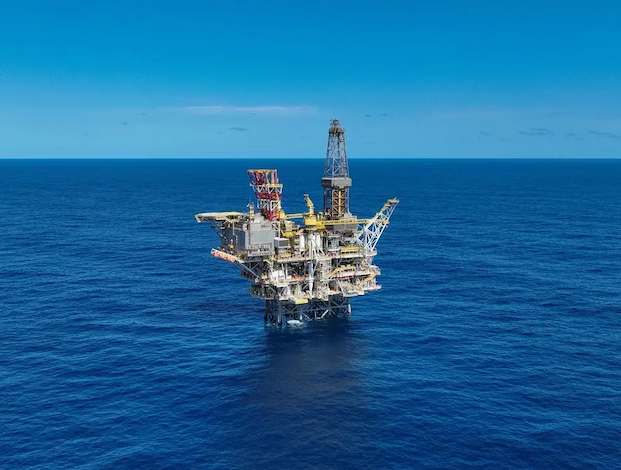
Brazil’s oil and gas sector has grown significantly due to the country’s massive hydrocarbons potential. The nation has the second-largest proven oil reserves in South America after Venezuela, with more than 95% of its oil and gas offshore. The nation boasts the largest recoverable ultra-deep oil reserves in the world, with the International Energy Agency forecasting that 50% of the world’s offshore oil could come from Brazil in 2040.
The industry is overseen by the National Agency of Petroleum, Natural Gas and Biofuels, known as ANP, which hands out exploration and production licences and ensures compliance with state regulations. Hydrocarbons are produced predominantly by NOC Petrobras. The company held a monopoly on the industry for around 40 years until the market opened up in 1997. Since then, the sector has attracted super-majors such as Shell, ExxonMobil, Chevron and TotalEnergies and local independents.
Rising upstream output has supported broader investment, while reforms and divestments have attracted new entrants to refining and marketing. To attract FDI and participation in the market, Petrobras has divested some refining assets in recent years, though it remains the dominant refiner. While Petrobras remains the largest player in the local downstream sector, with new entrants including domestic private refiners and fuel distributors, alongside some international participants.
Due to the country’s large size, a vast pipeline infrastructure is necessary to link the various oil-producing regions, refineries, terminals and distribution points. Most of the country’s pipelines are located in the southeast and northeast of the country. Midstream regulation and oversight involve ANP and the Ministry of Mines and Energy (with EPE supporting planning and studies).
While still one of the world’s largest oil and gas producers, Brazil’s renewable energy sector has seen titanic growth and accounts for around 80% of the country’s power generation mix, predominantly through its hydropower stations and biofuels and waste facilities. Brazil is among the world’s largest hydroelectricity producers. The government is looking to grow the mix of solar and wind facilities to meet its large potential and avoid losses caused by droughts.

Trinidad and Tobago’s oil and gas industry has had operations for more than a century and now supports the largest hydrocarbons production in the Caribbean. In the 1990s, the country successfully transitioned from an oil-dominated industry towards becoming a major gas producer. The country is a major LNG exporter and one of the leading suppliers in the Americas, hosting one of the largest LNG processing plants in the Western Hemisphere. The energy industry remains a key pillar for the economy, representing around 45% of its GDP despite the country’s efforts to diversify its industrial output. The upstream sector is governed by the Ministry of Energy and Energy Industries, while state-owned NGC plays a central role in aggregating and transporting gas. The sector has attracted many international stakeholders such as BP, Shell, Perenco and, most recently, ExxonMobil.
Due to a slowdown in upstream investment, the island has experienced declining gas production since 2014 and output is expected to remain tight in the near term, although several new offshore projects are expected to add supply later this decade. Because the country has such an abundant pool of gas resources, its gas processing and petrochemicals sectors have thrived. However, severe gas shortages in recent years have forced several midstream and downstream companies, including Atlantic and Methanol Holdings, to scale back activity. While traditional hydrocarbons reserves have dwindled, the island nation has made significant recent finds in its deepwater blocks to balance the country’s gas reserves with its production rate.
“The government is securing investors for the new industrial estates in its drive to expand foreign direct investment, diversify the economy and create employment opportunities for the people of Trinidad and Tobago. The focus on the energy industry is to increase production of both oil and natural gas,” Franklin Khan, former minister of energy and energy industries, told The Energy Year. “We are now in full thrust towards a trajectory of sustained growth and development and contributing to our sovereign wealth whilst stimulating foreign direct investment in our economy. It is a clear signal that our energy sector is the place to invest.”
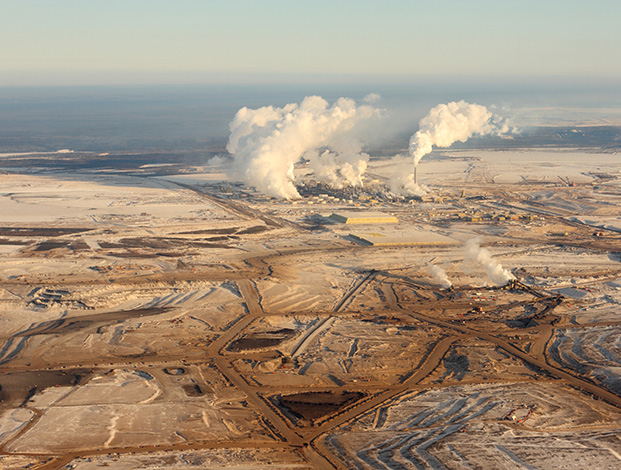
The world’s third largest holder of oil reserves, third largest natural gas producer and biggest source of US energy imports, Canada – fuelled by abundant oil sands – is now looking east to Asian markets as US demand levels off, production rises and the Keystone XL pipeline project drags on.
Chinese companies, including PetroChina and its China National Petroleum Corporation parent company have invested in the oil sands and other parts of Canada’s energy sector.
The participation of international oil companies, both private and state-owned, in Canada’s oil industry has risen rapidly. With 168 billion barrels as of the end of 2013, the oil sands represent 96 percent of Canada’s oil reserves. However, getting oil sands bitumen to market is no easy task. In order for the oil sands region to reach its potential, significant challenges must be overcome.
Undaunted by the challenges and renowned for its innovative companies and operators used to working in unconventional reservoirs Canada is determined to get maximum benefit out of its massive supply of hydrocarbons, including its 2 tcm (71 tcf) of proved natural gas reserves.