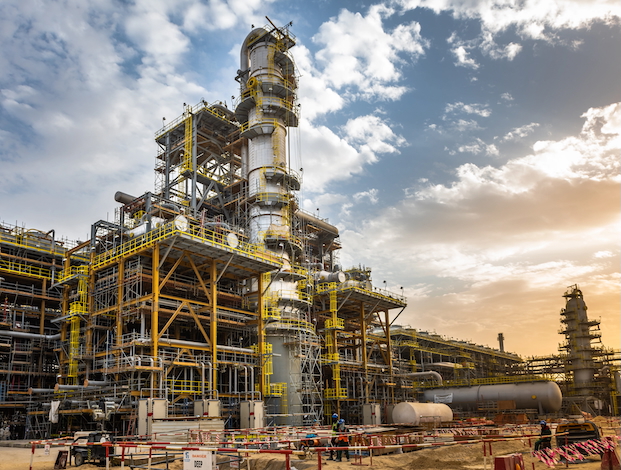
Despite its relatively small size, the UAE ranks among the world’s leading nations by oil and gas reserve volume. Abu Dhabi National Oil Company (ADNOC) is responsible for nearly all of the country’s hydrocarbons production. Supported by profits and royalties from the oil and gas sector, the UAE has traditionally channelled high levels of investment into greenfield and brownfield developments to sustain reserves and expand production capacity.
Oil and gas remain central to the UAE’s economy and fiscal strength, although the sector represents a smaller share of GDP than in the past as diversification accelerates. The government has pushed to broaden the economic base through long-term development strategies aimed at building stronger industrial, manufacturing and downstream sectors. While non-oil activity now accounts for the majority of GDP and continues to grow rapidly, hydrocarbons production remains a pillar of the economy and a major enabler of diversification. The UAE is targeting 5 million bopd of crude oil production capacity by 2027 to help meet rising global energy demand. Natural gas is also positioned as a transition fuel in national planning and is expected to remain a significant component of the country’s energy mix through 2050.
At the same time, the UAE is expanding the role of low-carbon energy. The government aims to increase the share of electricity generated from nuclear and renewables by mid-century, while scaling up renewable capacity as part of its wider net-zero agenda. Under the UAE Energy Strategy 2050, the country targets 44% renewables in its energy mix by 2050, alongside an expanded role for nuclear power, as it accelerates investment in utility-scale solar and enabling infrastructure. Overall, the UAE remains one of the region’s fastest-growing renewables markets, with major opportunities emerging in solar, waste-to-energy and hydrogen.

Iran holds the world’s second-largest natural gas reserves and its fourth-largest oil reserves. The country has been one of the world’s top oil producers for a century and has great potential to expand its gas output as most of its extensive reserves remain undeveloped.
Iran’s oil and gas industry is undergoing major changes. Under sanctions, oil exports were scaled back and many upstream projects involving IOCs were cancelled. Today, the National Iranian Oil Company is revving up production and has gradually returned Iran’s crude to the global market. In 2015, the country exported around 1.1 million bpd, a figure that rose to 2 million bpd by August 2016 and has remained at this level in 2017. Iran is seeking foreign investment to revamp and expand hydrocarbons operations and signed a landmark deal with Total in mid-2017. Fifty-two upstream projects were unveiled in late 2015, and new terms of investment in mid-2016.
In 2016, Iran produced 3.65 million bopd and, under the National Iranian Gas Company, 202.4 bcm of marketed natural gas. The government is planning five LNG facilities and new gas pipelines to support increased exports. With 67 petrochemicals projects under way, Iran aims to double its 2015 capacity of 60 million tpy by 2020. The Oil & Gas Year Iran 2018 was released in 2018 in partnership with Iran’s Ministry of Petroleum.
Oil and gas have been central to Saudi Arabia’s economic development and global standing for decades. The country holds one of the world’s largest proven crude oil reserves, accounting for around 17% of the global total, and consistently ranks among the top oil producers and exporters worldwide.
Crude oil and refined products are the backbone of Saudi Arabia’s external trade and public finances, dominating exports and providing a substantial share of government revenue. Sustained diversification efforts and fiscal reforms have gradually reduced exposure to oil price volatility.
The national energy industry is vertically integrated under NOC Saudi Aramco, which oversees upstream production, midstream infrastructure, refining and petrochemicals. Despite the existence of more than 100 active reservoirs, Saudi Arabia’s oil production is concentrated in a relatively small number of giant fields. These include Ghawar, the world’s largest onshore oilfield, and Safaniya, the largest offshore.
Alongside crude, Saudi Arabia holds significant natural gas resources, which are increasingly being developed to meet rising domestic demand, support industrial growth and enable greater volumes of crude oil to be directed toward export markets. Expanding gas production also furthers efforts to reduce the use of liquid fuels in power generation.
Downstream expansion has become a priority for economic diversification, and Saudi Arabia has invested heavily to position itself as a major global supplier of value-added energy products. In 2020, Saudi Aramco acquired 70% of Saudi Basic Industries Corporation (SABIC) to advance the country’s long-term liquids-to-chemicals strategy.
Saudi Arabia has made commitments under the Saudi Green Initiative and Vision 2030 to achieve net-zero GHG emissions by 2060. The country is scaling up renewable energy deployment, particularly utility-scale solar and wind, leveraging its ample solar irradiation and available land. National plans target renewables contributing around 50% of installed electricity capacity by 2030, supported by large procurement programmes, grid upgrades and storage integration.
Qatar’s oil and gas sector, led by QatarEnergy and overseen by the Ministry of Energy, has shaped the country’s modern development since oil was discovered in the mid-20th century. The offshore North Field – discovered in 1971 and shared with Iran’s South Pars – is widely recognised as the world’s largest non-associated natural gas field and holds recoverable reserves of more than 25.5 tcm.
Hydrocarbons activities and affiliated operations remain the backbone of Qatar’s economy, accounting for more than 70% of government revenues and the majority of export earnings in recent years. The state-owned company manages the country’s upstream and downstream oil and gas activities, including production, processing and export infrastructure, while the government continues to prioritise the sector as a cornerstone of national development.
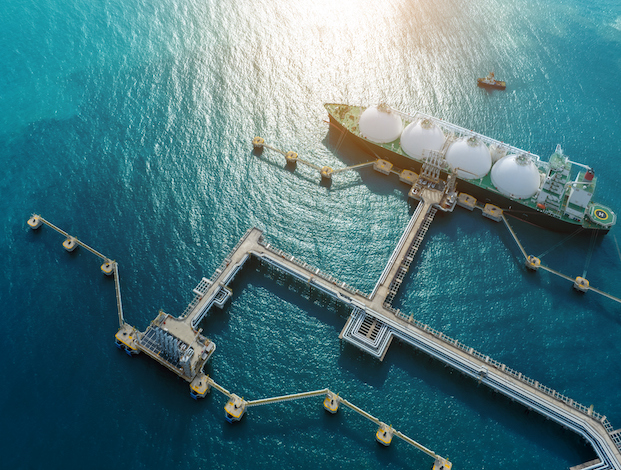
Qatar has invested heavily in LNG since the 1990s and remains among the world’s leading exporters. The country was the world’s third-largest LNG exporter in 2024, behind the US and Australia, exporting around 77 million tonnes that year. Qatar’s LNG exports have traditionally been sold under long-term, oil-indexed contracts, although the market has increasingly shifted towards shorter-term and more flexible arrangements as buyers diversify supply sources. Asia remains Qatar’s largest LNG market, but European demand for Qatari LNG has grown in recent years amid security-of-supply concerns.
While Qatar’s power generation has historically relied almost entirely on natural gas, the country has moved to expand renewable capacity, particularly solar. In 2024, Kahramaa launched the Qatar National Renewable Energy Strategy, which targets around 4 GW of utility-scale renewable capacity by 2030, raising renewables’ share of the power mix from about 5% to 18% by the end of the decade. Qatar’s first large-scale solar plant, the 800-MWp Al Kharsaah facility, was commissioned in 2022, with additional projects developed more recently to support the country’s longer-term diversification goals.
Oman’s oil and gas sector has long been a cornerstone of economic development. Commercial production began in 1967, and hydrocarbons remain a major source of government revenue and a key contributor to national GDP. Although subject to market and policy shifts, oil and gas continue to play an important role in export earnings and public finances.
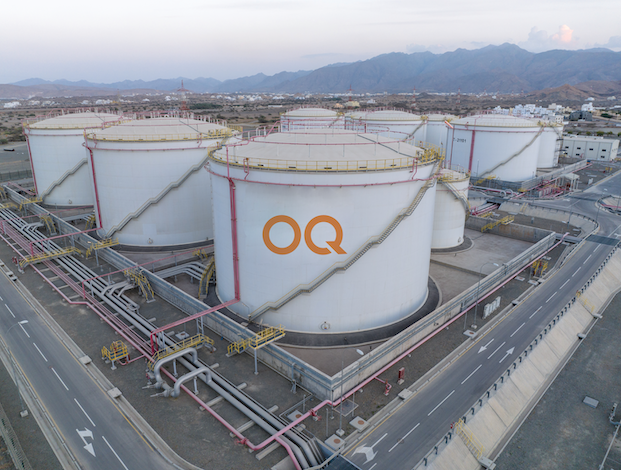
Oman is recognised as one of the largest non-OPEC oil producers in the Middle East and maintains an upstream landscape featuring both national and international operators. The Ministry of Energy and Minerals is responsible for setting overarching policy direction, supported by state entities such as the integrated energy group OQ, Energy Development Oman (EDO) and NOC Petroleum Development Oman (PDO), as well as other state-run players with lesser stakes in upstream, midstream and downstream operations.
PDO is the leading upstream operator, responsible for much of Oman’s crude and natural gas production and a pioneer in the introduction of EOR techniques to sustain output from mature fields. International companies – including Occidental Petroleum and BP – hold significant positions in major concessions such as Block 61’s Khazzan-Makarem gas development.
Under the Oman Vision 2040 development programme, the country is making progress towards expanding non-oil sectors and strengthening its industrial, advanced manufacturing and services activities.
Oman has also formalised a comprehensive energy transition roadmap with a commitment to achieve net-zero emissions by 2050 through investments in renewables, energy efficiency and low-carbon technologies. Natural gas accounts for more than 90% of Oman’s total power generation, but renewables – particularly solar and wind – are being scaled to bring their contribution to the energy mix to 30% by 2030.
Green hydrogen is emerging as a new industrial pillar, supported by land allocation programmes, regulatory frameworks and international tender rounds led by Hydrom, the administrator of all renewable hydrogen projects in Oman and the orchestrator of the national hydrogen strategy. Leveraging its ample potential for renewables, the country aims to produce 1 million tonnes per year, primarily for export.