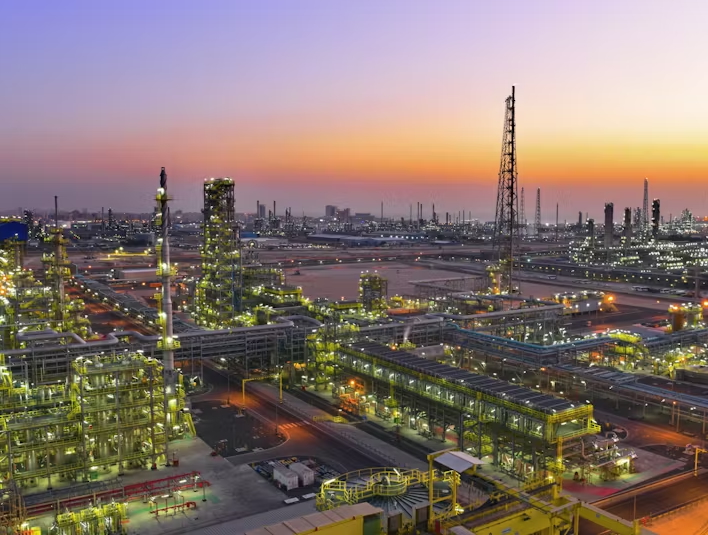
Kuwait is a founding member of OPEC and a major oil supplier to the global economy. The country holds some of the world’s largest proven oil reserves – long estimated at about 101.5 billion barrels – and remains one of the Gulf’s most significant producers. Kuwait’s resource base is dominated by high-quality, predominantly light crude, and despite ageing oilfields, it continues to benefit from a strong reserves-to-production ratio. The sector is managed by the state-owned Kuwait Petroleum Corporation (KPC), whose subsidiaries – the K-companies – operate across the value chain. Kuwait Oil Company (KOC) leads upstream operations, while Kuwait National Petroleum Company (KNPC) oversees refining and fuels marketing.
Although Kuwait is a major crude exporter, it has historically relied on LNG imports to meet domestic power demand because gas production has lagged consumption. Expanding gas supply remains a strategic priority alongside crude capacity growth. Kuwait is working to lift crude oil production capacity to 4 million bpd by 2035, supported by increased drilling, brownfield optimisation and a renewed push into offshore exploration. The country is also prioritising the development of resources in the Partitioned Zone shared with Saudi Arabia, including the Dorra offshore gasfield, which is seen as critical to reducing dependence on imported gas.
In the downstream, Kuwait has completed a major upgrade of its refining system. The start-up and ramp-up of the 615,000-bpd Al Zour refinery has lifted domestic refining capacity to around 1.4 million bpd, with Mina Al Ahmadi and Mina Abdullah accounting for the remainder. Through the Clean Fuels Project, Kuwait has improved product quality and shifted output towards higher-value fuels and feedstocks, including very low sulphur fuel oil (VLSFO) and petrochemical-linked streams.
Beyond the energy sector, Kuwait Vision 2035 aims to position the country as a regional financial and trade hub by strengthening infrastructure, improving the business environment and increasing the role of the private sector. While diversification is a stated objective, hydrocarbons will continue to underpin investment and fiscal stability in the medium term. The Energy Year Kuwait 2024 highlights the investment decisions and development priorities shaping the country’s energy industry and provides assessments of the strengths, weaknesses and opportunities across its segments through first-hand interviews with Kuwait’s leading executives and policymakers.
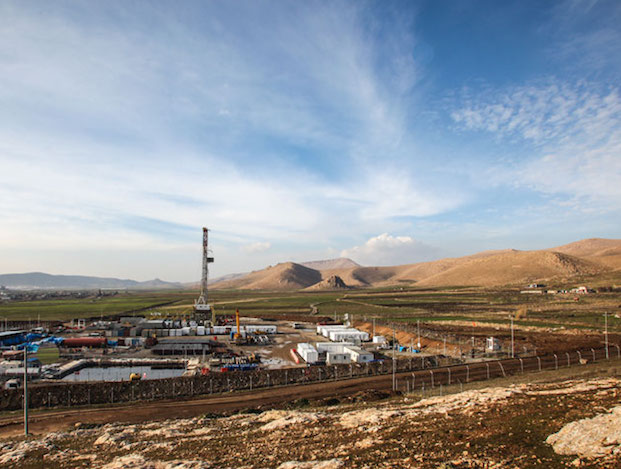
The Kurdistan Region of Iraq’s oil and gas industry was late to take off, despite discoveries in the region beginning in the 1920s. However, the region proved highly successful in attracting major international operators from the mid-2000s onward, including ExxonMobil, Chevron, Gazprom, Dana Gas and TotalEnergies. The Kurdistan Region is an autonomous region within Iraq, although it held a unilateral independence vote in 2017 to mixed international reception. Despite political upheaval and war, the Kurdistan Region has demonstrated resilience, though disputes over revenue flows and export arrangements have periodically affected payments to operators.
The region’s hydrocarbons sector is overseen by the Ministry of Natural Resources, which operates independently of Baghdad’s Ministry of Oil. However, the Kurdistan Region continues to face challenges arising from its independent oil and gas legal framework, which Baghdad has deemed unconstitutional and which has long been disputed in terms of national budget support and federal authority.
Heavy sour crude produced in the Kurdistan Region began to be exported to the Ceyhan terminal in Turkey in 2014 through the KRG’s pipeline network, including the DNO–Tawke pipeline. Exports were later halted following the Iraq–Turkey pipeline shutdown in March 2023, and discussions to restore flows have continued since, including agreements announced in late 2025 to enable resumption under revised arrangements.
Further gas pipeline infrastructure has also been planned to support the region’s intended rise in production. Alongside this, the Kurdistan Region requires investment to expand its power generation capacity in order to support a growing oil and gas industry, which remains the largest industrial consumer of energy.
In parallel with its hydrocarbons ambitions, the Kurdistan Region has begun positioning renewables as a strategic pillar of power-sector reform. The KRG has stated plans to significantly expand solar generation capacity over the coming decade, including a target of reaching around 3 GW of solar electricity by 2034, alongside efforts to attract private investment and improve grid performance.
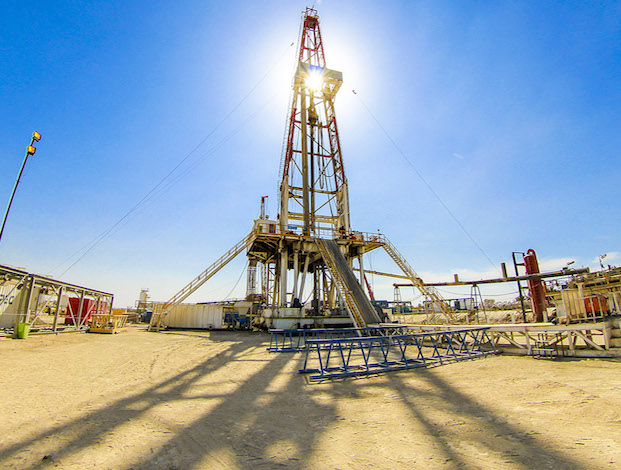
Iraq is the second-largest oil producer in OPEC. The country holds around 145 billion barrels of proven crude oil reserves, among the largest globally. The national oil and gas sector is overseen by the Ministry of Oil, and the government participates in E&P activities through the following state-owned entities: North Oil Company, Midland Oil Company, Dhi Qar Oil Company, Basrah Oil Company and Missan Oil Company.
Most of Iraq’s hydrocarbons are concentrated along the country’s eastern edge, near the border with Iran. The super-giant fields in the southeast near Kuwait represent the world’s greatest concentration of such finds and contain more than 70-80% of the country’s reserves, while around 20% is located in the northern region. Production is driven predominantly by Iraq’s NOCs. The country is seeking to raise output from its maturing assets, which will require water injection, including seawater conversion/injection. Iraq’s impressive gas potential has also been largely overlooked, with the country relying on gas imports to meet demand. Efforts are underway to reduce gas flaring and expand the transport infrastructure needed to support domestic gas development.
Iraq has significant refining capacity, but much of the sector’s infrastructure has become antiquated and operates at around 50% capacity. These ageing facilities produce more heavy fuel oil than refined products, creating a mismatch with domestic demand. The state has discussed imposing measures to redirect investment away from upstream activity and towards downstream development, in an effort to generate more direct economic growth.
Raising production on Iraq’s oil and gas fields will also require additional power generation capacity. The hydrocarbons industry has traditionally accounted for 10% of total energy demand in the country, a share expected to rise as output increases. Despite the resilience of Iraq’s hydrocarbons sector, political turmoil has weighed on investment in power generation. The government has taken steps to curb consumption, but further investment will be required to meet the country’s industrial targets.

Bahrain’s oil and gas sector is minor compared to neighbouring industries but significant to the country’s energy industry and economy. While it is the smallest oil producer among GCC members, the industry has traditionally dominated export receipts and contributed the bulk of government revenues. The sector is run by key state players such as Bapco Energies, National Oil and Gas Authority and its investment arm Nogaholding. The country began diversifying and liberalising its economy in the 1970s and now boasts developed non-hydrocarbons sectors such as Islamic banking, tourism and construction.
Most of Bahrain’s oil and gas production is from its onshore Bahrain field (also known as Awali) and offshore Abu Safah field. The latter field makes up most of the country’s production and is operated by Saudi NOC Saudi Aramco, with 50% of its revenues transferred to Bahrain. The country made a significant find on its offshore Khalij al-Bahrain reservoir in 2018 that boosted expected reserves significantly by 80 billion barrels.
While the country continues to explore and develop its oil and gas assets, Bahrain aims to have net-zero carbon emissions by 2060. To reach this target, Bahrain aims to produce 710 MW from renewable sources by 2035. Bahrain’s Sustainable Energy Authority was created in 2019 to oversee efficient energy policy and promote renewables in the energy mix. The entity is targeting solar, wind and waste-to-energy facilities to achieve its goals.