

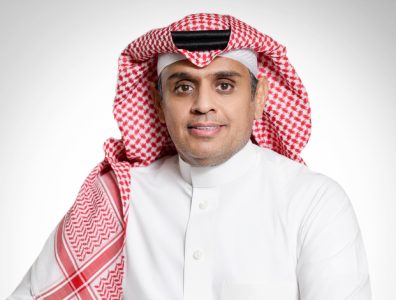





Salem bin Ashoor, BP’s chief representative and general manager in the UAE, talks to The Energy Year about the company’s role in the energy transition and its…
READ MORE
Oil reserves145 billion barrels
Oil Production4.1 million bopd
Gas reserves3.5 tcm
Gas production9.4 bcm
Iraq’s oil and gas industry has remained stable during the country’s ongoing challenges and conflicts. The country remains the fourth-largest producer of hydrocarbons and the second-largest producer in OPEC. Iraq’s impressive reserves are the third largest in the world behind Saudi Arabia and Iran. The national oil and gas industry is overseen by the Ministry of Oil. The government is involved in E&P activities through the following state-owned entities: North Oil Company, Midland Oil Company, Dhi Qar Oil Company, Basrah Oil Company and Missan Oil Company.
The majority of the country’s hydrocarbons are found in the country’s eastern edge near its border with Iran. The super-fields in the southeast near Kuwait form the greatest concentration of such finds worldwide and contain more than 70-80% of the country’s reserves. About 20% of its reserves are found in the northern region. Production comes predominantly from the nation’s NOCs. The country is looking to up production from its maturing assets, which will require fresh-water injection. Given that fresh water is a rare commodity in Iraq, opportunities exist in building related infrastructure. Iraq’s impressive gas potential has also been largely overlooked, with Iraq relying on gas imports to meet demand. Work continues to bring down gas flaring and develop related transport infrastructure.
Iraq has significant refining capacity, but assets have largely become antiquated and function at around 50% capacity. The aged facilities produce more heavy fuel oil than refined products, which does not match the nation’s demand requirements. The state has discussed imposing measures to move investment focus from its oil and gas production towards developing its downstream capacities to spur direct economic growth for the country.
Another requirement for upping production on Iraq’s oil and gas fields is a rise in power generation capacity. The hydrocarbons industry traditionally takes up 10% of total energy demand in the country, which is expected to rise as output increases. Despite an almost entirely resistant hydrocarbons industry, political turmoil has taken a toll on investment in its power generation sector. Efforts to curb consumption have been made by the government, but further investment is needed to meet the country’s industrial targets.
Anas Meerza of National Technology Enterprises Company talks about introducing renewables technologies in Kuwait.
READ MORE
BP has signed an MoU with the government of Iraq to develop oil and gas, power generation and solar in the Kirkuk region.
READ MORE
OPEC+ has decided to extend oil production cuts into 2025.
READ MORE
Alexandre Eykerman of Wärtsilä talks about the company’s pioneering role in adapting its solutions to the energy transition.
READ MORE
The Iraqi government has signed a deal for the supply of up to 50 mcm per day of gas from Iran.
READ MORE
The National Iranian Oil Company has awarded contracts to local players for projects aiming to boost output by up to 400,000 bopd.
READ MORE
Several OPEC+ members have extended voluntary oil production cuts of 2.2 million bpd into Q2 2024.
READ MORE
Salem bin Ashoor, BP’s chief representative and general manager in the UAE, talks to The Energy Year about the company’s role in the energy transition and its…
READ MORE
Oil was down on Monday morning in Asia, with rapid falls of over 4% as markets opened. European Covid-19 lockdowns took center stage over the weekend, and concerns over…
READ MORE
Ravi Varrier, CEO of Al Rashed International Shipping Company, talks to The Energy Year about how the company has navigated Covid-19 and the oil price drop and how the…
READ MORE
Oğuz Kirkgӧz, executive vice-president of ENKA, talks to The Energy Year about how the company’s projects in Iraq have been affected by the Covid-19 pandemic and…
READ MORE
Oil was down on Friday morning in Asia as some of the biggest oil producing members of the Organization of the Petroleum Exporting Countries and Allies (OPEC+) vouched…
READ MOREGhassan Mirdad, president of the eastern Middle East region at Schlumberger, talks to The Energy Year about the resiliency of the Middle Eastern oil and gas industry…
READ MORE
Zaher Ibrahim, Baker Hughes’ vice-president for Saudi Arabia, the North Gulf and the East Mediterranean, talks to The Energy Year about the importance of having a…
READ MORE
Oil was down on Thursday morning in Asia, with ever-increasing numbers of Covid-19 cases continuing to hinder investor confidence in the global economic…
READ MORE
Oil was up on Friday morning in Asia, finishing the week by adding to gains from the previous session.
Brent oil futures rose 0.51% to $41.72 by 10:11 PM ET (3:11 AM…
READ MORE
Oil was up on Monday morning in Asia, after OPEC extended its existing production cuts into July on Saturday, with output to be cut by 9.6 million barrels next…
READ MOREWHOSE PLATFORM IS THIS?
ASK US