
Senegal
Algeria
Madagascar
Somalia
Nigeria
Nigeria’s hydrocarbons sector has come a long way since oil was discovered in the Niger Delta in 1956, with the nation now boasting the largest reserves of both oil and gas in sub-Saharan Africa. The sector is the breadwinner for the country in terms of foreign exchange earnings and represents around 80% of the nation’s budget revenues.
The oil and gas sector is dominated by NOC Nigerian National Petroleum Corporation, which participates in all areas of the value chain. While the country contains many hydrocarbons-rich basins, the majority of producing assets are crowded around the prolific Niger Delta Basin in the south of the country. The government aims to raise crude oil output by 1 million bopd by 2026 under Project 1 MMBOPD.
The country’s regulatory issues and fiscal uncertainties have long been challenges for international investors looking to participate in the market and have led to significant delays or cancellations of prospective projects. The government has continuously reformed its policies to address these issues and open the market while successfully increasing safety of its assets. Meanwhile, local-content promotion and IOC divestments are driving a shift toward indigenous operators in the upstream.
Traditionally an oil producing country, Nigeria has struggled to transition towards gas and beyond fossil fuels as the global industry moves towards reducing carbon emissions and utilising more green energy sources. To address this, the government set up the Gas Master Plan in 2008. This has propelled the country to develop gas infrastructure, including gas processing plants, pipelines and gas-to-power and petrochemicals facilities. Nigeria plans to produce 10 bcf per day by 2030, with NNPC leading USD 60 billion in related investments.
The country aims to establish itself as a refining hub for the region through several large projects, including the 650,000-bpd Dangote Refinery. However, nearby countries have also made efforts to up their refining potential and could potentially take a large share of regional refining.
Mozambique
Mozambique’s oil and gas sector was put on the world map with the discovery of major offshore gas plays beginning in 2010. Continued finds and investment have fast-tracked the nation towards potentially becoming one of the largest LNG suppliers globally, with operators TotalEnergies, Eni and ExxonMobil leading the charge through massive development of upstream and associated facilities. Mozambique has traditionally only produced gas from its onshore plays operated by South Africa’s Sasol, and the country is reliant on oil and fuel imports.
Mozambique has made progress in streamlining policies and breaking down bottlenecks to realise its immense potential. However, security issues and economic factors have held back large-scale development, with many projects put on hold.
Government involvement in hydrocarbons operations takes place through NOC Empresa Nacional de Hidrocarbonetos, which is a mandated stakeholder in all oil and gas operations. Upstream E&P concessions are handed out and overseen by state body the National Petroleum Institute, which has been active in carrying out seismic studies to expand the country’s investment potential.
Mozambique has immense hydropower potential thanks to the Zambezi River, whose latent generation capacity is estimated to be up to 20 GW, and the share of solar and wind in the country’s electricity generation mix been rising in recent years. Solar and wind offer opportunities to diversify the country’s energy mix and bring power to remote areas. In this context, the government aims to invest around USD 80 billion towards energy transition by 2050, with funds from both public and private players.
“Mozambique boasts vast energy resources with the potential to significantly impact both our nation and the region. Investments made here will not only contribute to Mozambique’s development but will also have a significant influence across Southern Africa,” Carlos Zacarias, Mozambique’s Minister of Mineral Resources and Energy told The Energy Year.
Libya
Republic of Congo
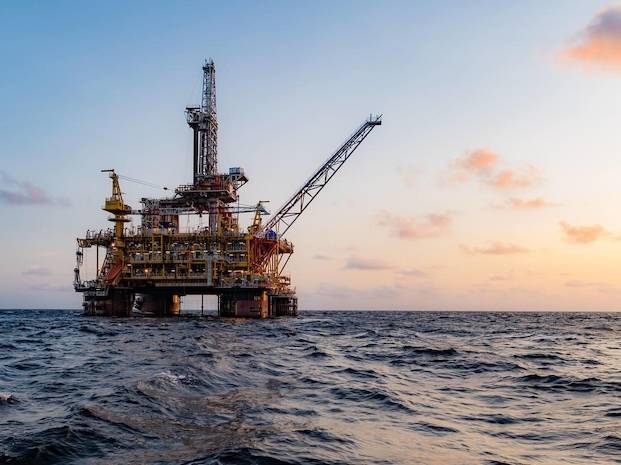
The Republic of Congo is one of the largest crude producers in sub-Saharan Africa, typically ranking among the top four. The nation produces mainly oil, with only small amounts of natural gas and condensate liquids. As a net exporter of crude, the majority of the country’s revenues are dependent on fluctuations in oil prices. The OPEC member has long attempted to make the market attractive to foreign IOCs to sustain production and support future growth.
The country’s hydrocarbons sector is dominated by NOC SNPC, which represents the State’s interests in the upstream sector and participates alongside operators under production-sharing contracts. The state-run company has been joined by many IOCs participating in the upstream sector, including TotalEnergies, Perenco and Eni, while Chevron has exited the country following the sale of its Congolese assets (now held by Trident Energy). Independents also play a role in tapping into the country’s resources. Most producing fields are now offshore, including the prolific Moho Nord field development.
To curb the country’s reliance on export prices, the government has set out plans to diversify the economy and upgrade power generation and refining capacity. Gas use for electricity generation has been expanding in recent years, and additional avenues for gas monetisation are being studied as part of broader efforts to add value to domestic resources.
The USD 5-billion Congo LNG project is expected to reach a total capacity of 3 million tonnes per year once its second phase is fully in place. First gas was introduced to the project’s first FLNG vessel, Tango, in December 2023 and the inaugural shipment from the facility was announced in late February 2024.
Tanzania
Tanzania’s oil and gas sector has grown significantly since major gas reserves were discovered offshore at the Songo Songo and Mnazi Bay fields in 2004. The country now exports gas and has used revenues to diversify its energy offerings and create more economic stability. The government has also ratified its oil and gas policies to create a more conducive environment for international investors and growth of local industry and talent. Tanzania is currently working under its Natural Gas Utilization Masterplan 2016-2045 that looks to organise the industry and pinpoint and develop further gas-related projects.
In March 2016, Dodsal Group made Tanzania’s first large onshore gas discovery with a 76.4 bcm (2.7 tcf) find in the country’s Ruvu Basin region. Potential reserves are estimated around 107.6 bcm (3.8 tcf). Ultimately, the discovery could represent between USD 11 billion worth of natural gas.
NOC Tanzania Petroleum Development Corporation is the sole licence holder for upstream plays. The state-owned player has created subsidiaries TANOIL to deal with downstream operations and Gas Company Tanzania to deal with both midstream and downstream activities. The Tanzanian government has maintained a favourable attitude towards foreign investment and managed to attract large IOCs to explore the country’s hydrocarbons reserves, including Equinor, ExxonMobil, Shell and MedcoEnergi.
The current government is pushing for the development of Tanzania’s yet untapped offshore gas reserves to generate new streams of revenues for the state and boost economic growth. Investment opportunities also exist in the country’s active diversification schemes, including export pipelines and LNG terminal projects.