Local upstream operator Yinka Folawiyo has successfully spud a new well at the Aje field offshore Nigeria. The Aje-5 well is part of the first phase of a two-phase…
READ MORE
2023 oil reserves36.9 billion barrels
2023 oil production1.54 million bopd
2023 gas reserves5.98 tcm
2023 gas production43.7 bcm
Nigeria’s oil and gas industry has come a long way since oil was discovered in the Niger Delta in 1956, with the nation now boasting the largest reserves in Africa. The hydrocarbons sector is the major breadwinner for the country in terms of foreign exchange earnings and represents around 80% of the nation’s budget revenues. The OPEC member has often held the position of top crude producer in Africa, although competing countries in the region have recently come neck-to-neck with the West African nation.
The oil and gas sector is dominated by NOC Nigerian National Petroleum Corporation, which regulates and participates in all areas of the industry’s value chain. While the country contains many hydrocarbons-rich basins, the majority of producing assets are crowded around the prolific Niger Delta basin in the south of the country.
The country’s regulatory issues and fiscal uncertainties have long been challenges for international investors looking to participate in the market and have led to significant delays or cancellations of prospective projects. The government has continuously reformed its policies to address these issues and open the market while successfully increasing safety of its assets.
Traditionally an oil producing country, Nigeria has struggled to transition towards gas and beyond fossil fuels as the global industry moves towards reducing carbon emissions and utilising more green energy sources. To address this, the government set up the Gas Master Plan in 2008 that has propelled the country to develop gas infrastructure, including gas processing plants, pipelines and gas-to-power and petrochemical facilities.
The country aims to set itself up both as a top producer and potential refining hub for the region through several large projects, including the 650,000-bopd Dangote Refinery. However, nearby countries have also made efforts to up their refining potential and could potentially take a large share of regional refining.
Raúl Pérez Tatis of Puerto Bahía talks about how the port can support hydrocarbons and clean energy.
READ MORE
Chibuike Achigbu of Chimons Gas talks about the Triansel Gas project in Koko, Delta State.
READ MORE
The Nigerian federal government plans to invest USD 800 million in power infrastructure.
READ MORE
NIPCO Gas and NNPC Gas Marketing officially inaugurated a gas supply project in Nigeria's Lekki Free Zone.
READ MORE
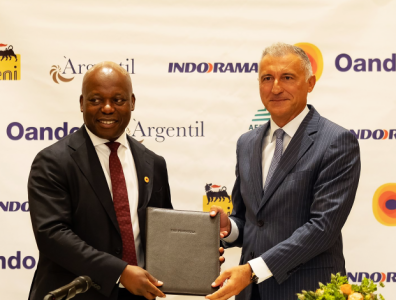
Nigeria’s Oando completed its USD 783-million acquisition of the Nigerian Agip Oil Company (NAOC) from Eni.
READ MORE
Nigeria's downstream regulator NMDPRA licensed the Edo Refinery, allowing it to begin operations.
READ MORE
Local upstream operator Yinka Folawiyo has successfully spud a new well at the Aje field offshore Nigeria. The Aje-5 well is part of the first phase of a two-phase…
READ MORE
In a Friday statement, Eni announced that a pipeline explosion in Nigeria on Thursday afternoon killed 12 people and injured three others at a repair site. The Italian…
READ MORE
Nigeria’s Shoreline Group plans to sell $2 billion in bonds to purchase oil and gas assets in Africa.
CEO Kola Karim told Bloomberg that the group is eyeing…
READ MORE
Vitol Group and Helios Investment Partners will acquire a majority stake in Oando’s downstream unit for $276 million.
Dutch-owned commodity traders Vitol and…
READ MORE
Simone Volpi, managing director of Intels Nigeria, talks to TOGY about the role logistics bases play in developing the country’s hydrocarbons industry and the impact…
READ MORE
A fire at two crude oil storage tanks at Eni’s Ebocha plant in Nigeria has forced the shutdown 20,000 barrels of oil per day in production.
A pipeline connected to…
READ MORE
Five of the six board members at Africa-focused oil and gas company Afren have resigned, as the company faces severe financial distress.
Executive chairman Egbert…
READ MORE
Much of Nigeria’s pipeline infrastructure dates back to the 1960s, which affects the country’s ability to provide feedstock to power plants. With some of the…
READ MORE
Chevron has announced that it will sell its 40-percent stakes in two Nigerian shallow-water developments, Oil Mining Leases (OML) 86 and 88.
The sale of the Niger…
READ MORE
The Nigeria Security and Civil Defence Corps (NSCDC) will deploy 500 drones and aircraft to monitor pipelines and other oil installations in a bid to protect the…
READ MOREWHOSE PLATFORM IS THIS?
ASK US